


Messages For Android
3.81.27K Reviews
App Specs
- Version
- 5.5
- Updated On
- License
- Free
- Downloads
- 1,000,000+
- Developer
- Akshay Mehta
- Categories
- Communication
- Platform
- Android
Screenshots


 Analysis by AppCompare
I judge a messaging app less by how many ways it lets me decorate a chat and more by whether it helps me stay in touch without demanding my attention all day. Messages for Android is a straightforward communication app from Akshay Mehta, built around everyday texting. It suits people who want a familiar place for their conversations, though its modest average rating of 3.5 across around 5,500 ratings suggests that not everyone finds it equally satisfying.
Getting Started with Messages
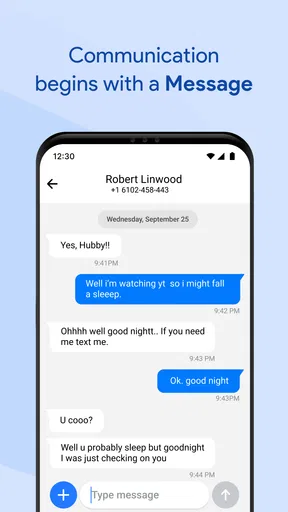
If you’ve ever used an Android phone, you’ve likely stumbled upon Messages for Android. It’s like that reliable friend who never lets you down. Setting it up is a breeze. You just open the app, and bam, you’re ready to start texting away. Whether you’re sending a quick "hello" to a friend or having a deep late-night conversation, it’s got your back.
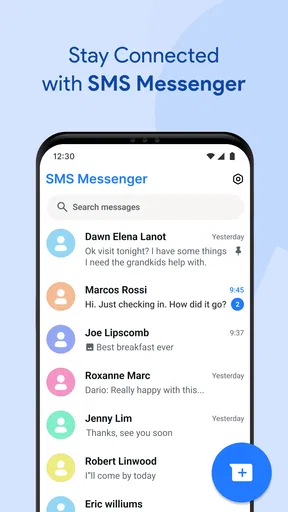
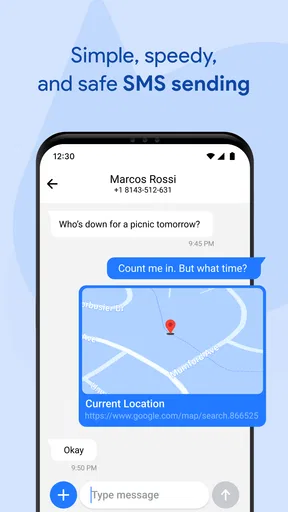
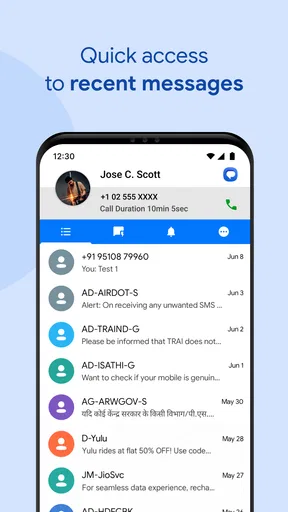
The app interface is super intuitive. Once you open it, the first thing you'll notice is the clean layout. Conversations are listed in order, with the most recent at the top, making it easy to find your latest chats. The search bar is a nifty feature, helping you track down specific messages in a jiffy.
A familiar flow for daily conversations
For a practical daily routine, the main advantage of a conversation list is that it keeps the next action obvious: open the person you need, read the latest message, and reply. That works especially well for short exchanges such as confirming a pickup time or answering a family message between errands. Search becomes more useful when a chat has been quiet for a while and you need to find an old detail, such as an address someone sent. I’d search for that detail instead of scrolling through months of conversation.
That simple rhythm is also a trade-off. If you want one app to organize projects, assign tasks, or keep long-running discussions neatly separated, a dedicated team messenger may be a better fit. This is most comfortable when the goal is to communicate directly, not manage a shared workspace. With more than a million installs, it has found an audience, but that doesn’t mean its approach will suit every Android user.
Features that Stand Out
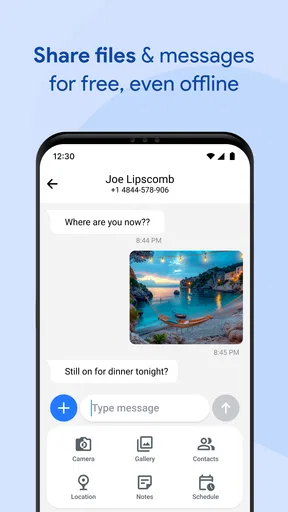
Now, let’s talk about the features. The app isn’t just about sending plain old texts. Oh no, it has evolved. First up, we have the Rich Communication Services (RCS). Think of it as texting 2.0. With RCS, you can send high-res photos, videos, and even see when your friends are typing back. It’s like texting, but way cooler.
Another cool feature is the ability to send voice messages. Sometimes typing just doesn’t cut it, and you need to express yourself with a voice note. The app makes it super easy to record and send.
Worth Reading Before You Choose

EA SPORTS FC Mobile 26 Is a Bigger Football Game, but It Takes Time

Flipboard Shows What News Apps Must Do Beyond the Feed

Switching to Android Auto Means Rethinking Your Driving Routine

Google Calendar Makes a Crowded Week Easier to Manage

Ludo King Makes the Most of the Minutes Between Plans

Baby Panda World Brings Quick Play to Modern Phones, but Its Game Library Feels Busy
I also love that you can send emojis, stickers, and GIFs to spice up your conversations. Let’s be real, who doesn’t like a good GIF to express what words simply can’t?
When richer messages change the pace
RCS can make a conversation feel less like a series of isolated texts. Typing indicators, read information, and richer media can help both people understand whether a message is still being composed or has been seen. That can be useful when coordinating a time-sensitive plan, but it can also make a casual chat feel more immediate than it needs to be. I try to treat those signals as context, not as a demand for an instant reply.
There is an important practical distinction: richer messaging is most useful when the other person can participate in the same kind of conversation. For a contact whose phone or messaging setup does not support those features, the experience may be closer to ordinary texting. If you mainly exchange plain text, that difference may barely matter; if you regularly send large photos or rely on typing indicators, it is worth checking how the conversation behaves with the people you message most.
Voice notes are another small choice that affects conversational pace. They can be faster than typing when your hands are busy, or clearer when tone matters, but they are less convenient for someone who cannot listen at that moment. For directions or a short update, I’d use one; for a detail the other person may need to search later, a concise text is usually kinder and easier to refer back to.
Group Chats and More
For those who love group chats, you’ll find the app’s capabilities quite pleasing. You can easily create groups, add or remove participants, and even give your group a fun name. It’s perfect for planning events or just keeping in touch with your squad.
And if privacy is your thing, the app offers end-to-end encryption for one-on-one conversations. It’s always nice to know your texts are just between you and your recipient.
Groups, privacy, and choosing the right channel
A group chat is handy for a family meal or a small get-together because everyone can see the same plan instead of receiving a string of separate updates. My tip is to put the key information in a clear message—time, place, and what still needs deciding—rather than assuming everyone has followed every reply. A group name can also help distinguish a practical thread from a busy social one when several conversations are active.
For a group that generates constant jokes and side conversations, though, a messaging thread can become hard to scan. A smaller group or a separate channel in an app designed for communities may be easier if members need topics, moderation, or a searchable record of decisions. Messages is better for casual coordination than for running a large or structured group.
The encryption point deserves a careful reading: the stated protection applies to one-on-one conversations, so I wouldn’t assume that every group exchange has the same protection. If a conversation involves sensitive information, check the security indicators for that specific chat and avoid sending details that do not need to be shared. For routine messages, the privacy feature is reassuring; for high-stakes communication, I’d choose a channel whose protections I have verified for the exact kind of conversation.
Customization and User Experience
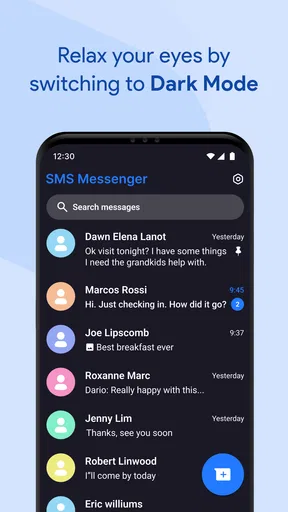
One thing I appreciate about Messages for Android is the customization options. You can change the chat bubble colors, set your own background theme, and even personalize notifications for different contacts. It’s all about making the app feel like it’s truly yours.
Navigating through the app is a breeze. It’s smooth, responsive, and I’ve never encountered any crashes. It’s that kind of reliability you want in a messaging app.
Keeping notifications useful rather than noisy
Personalized notifications can do more than make chats look or sound different: they can help me decide which interruptions deserve attention. I’d reserve a distinct alert for a person whose message may need a prompt response and keep less urgent conversations quieter. That small bit of setup can make a busy day feel more manageable without requiring me to check every thread as it arrives.
There is a boundary to that strategy. If every contact gets a special alert, the distinctions stop helping and the phone can become more distracting. I’d also avoid reading a typing indicator or a notification preview as an obligation to reply immediately. A messaging app supports a conversation; it cannot decide how available I should be. For people who want deep control over notification schedules or focus rules, the phone’s system settings may be more useful than chat-by-chat customization alone.
Compatibility and Integration
This app plays well with others. It seamlessly integrates with Google services, allowing you to back up your conversations to Google Drive. So, if you switch phones, you won’t lose any of your chats.
Plus, it’s compatible with other messaging apps. You can send texts to anyone, whether they’re using an Android device or not. It’s all about staying connected with everyone, regardless of their phone type.
Switching phones and comparing alternatives
Before changing phones, I would check that the backup is enabled and that the account and restore steps are clear; a backup is only useful if it can be brought back when needed. I’d also avoid treating a messaging app as the sole home for important information. Save essential details somewhere appropriate rather than relying on finding an old chat at the last minute.
Compared with internet-based messengers such as WhatsApp or Signal, the appeal here is the familiar texting-first approach and the ability to reach people through ordinary messages, rather than asking every contact to join the same service. Those alternatives may be preferable when a whole friend group already uses them or when their particular privacy and group tools matter more. For conversations across phone types, a plain text can be the least complicated option, while richer RCS exchanges are more useful when both sides support them.
The app is free to start, rated for Everyone, and current at version 4.9, with Android 8.0 as its minimum operating system. In-app purchases range from $9.99 to $44.99 per item, so I’d check what an optional purchase offers before paying; basic texting is the reason to try it, not a promise that every extra is necessary. It was released on February 1, 2024, and its 807 reviews give prospective users more individual feedback to weigh alongside the overall rating.
Final Thoughts
So, what’s my final verdict on Messages for Android? It’s a solid app that does what it’s supposed to do, and then some. Whether you’re a casual texter or someone who lives in their messages app, it’s got the features to keep you happy.
Sure, there are tons of messaging apps out there, but sometimes sticking with the classic isn’t such a bad idea. With its user-friendly interface, impressive features, and reliable performance, it’s an app I’d recommend giving a shot if you haven’t already.
I’d recommend it most to someone who wants a familiar texting routine, exchanges a mix of short messages and media, and appreciates having conversations in one straightforward place. I’d skip it if my main need were advanced team collaboration, highly structured community chats, or a single privacy guarantee covering every type of conversation. A useful first test is to message the few people you contact most, see which features work in those chats, and adjust notifications before relying on it for a busy day.
And there you have it, folks! That’s my take on Messages for Android. Give it a whirl and see how it fits into your daily messaging routine. Happy texting!
Pros
- Seamless integration with Android devices.
- Supports multimedia messages easily.
- Customizable notifications for contacts.
- End-to-end encryption for security.
- User-friendly interface for texting.
Cons
- Lacks advanced organizational features.
- Limited customization for themes.
- No built-in translation for messages.
- Occasional delays in message delivery.
- Requires more storage space over time.
FAQs for Messages For Android
What features does Messages For Android offer?
Messages For Android provides a rich set of features including SMS, MMS, chat functionality, and integration with RCS (Rich Communication Services). Users can enjoy group messaging, read receipts, typing indicators, and the ability to share photos and videos. The app also offers customization options for themes and notifications, ensuring a personalized messaging experience.
Is Messages For Android secure and private?
Yes, Messages For Android prioritizes user privacy and security. It includes end-to-end encryption for RCS messages, ensuring that only you and the person you're communicating with can read the messages. Additionally, it provides spam protection features to keep unwanted messages at bay, enhancing overall security.
Does Messages For Android support multimedia sharing?
Absolutely! Messages For Android allows users to send and receive various multimedia content, including photos, videos, and voice messages. The app supports high-quality image sharing and easy file transfers, ensuring that your multimedia experiences are seamless and enjoyable.
Can I use Messages For Android on multiple devices?
Currently, Messages For Android primarily functions on a single device. However, it offers a web version that can be accessed from a computer. By visiting the Messages for Web site and scanning the QR code with your Android device, you can send and receive messages directly from your desktop.
Is Messages For Android compatible with all Android devices?
Messages For Android is compatible with most Android devices running Android 5.0 (Lollipop) or higher. However, some features, particularly those related to RCS, may depend on your carrier and device capabilities. It's always a good idea to check for updates to ensure compatibility and access to the latest features.


